

The Best Waterfalls in Bali: How to Choose the Right One for You
There’s a version of Bali that never makes it onto most people’s itinerary: standing under a curtain of water dropping through a wall of jungle, mist on your skin, birdsong instead of scooter horns, and not a beach club in sight. We’ve had honeymooners ask us for “the best waterfall in Bali” as if there’s one correct answer, and the honest reply is always the same, it depends on the hike you’re willing to do and the crowd you’re willing to share it with.
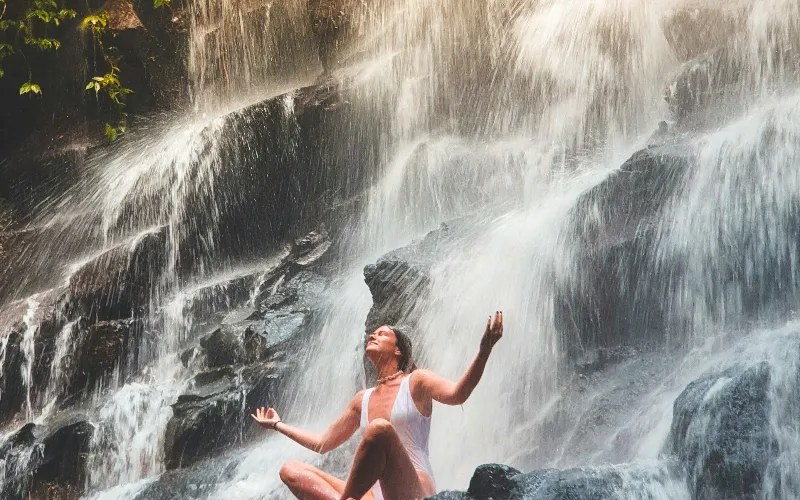
As a general rule, this comes down to geology: Bali’s volcanic mountains sit mostly in the north, and every river running down those slopes toward the coast eventually finds a cliff to drop from, which is why North Bali produces the most dramatic waterfalls on the island. Central Bali around Ubud trades some of that drama for easy access, which is why its waterfalls tend to be the busiest. South Bali gives you exactly one waterfall worth a special trip.
One thing that catches people off guard, especially visitors from Europe is almost every waterfall on this list charges an entrance fee. It’s usually the local village that built and maintains the stairs, the parking, and the paths, and the fee goes toward keeping the site walkable. Coming from countries where nature is free to wander, this surprises a lot of our guests, but we’ve come to see it as a fair trade for stairs that don’t collapse under you.
We’ve grouped this guide by region and travel style below, because it depends on whether you’re after a serious hike, a swim, a spiritual reset, or a clean Instagram shot without a two hour wait. And if waterfalls end up being more of a rainy day plan than the main event, our best beaches in Bali guide covers the coastline side of things.
North Bali Waterfalls, The Most Dramatic Ones If You’re Willing to Drive
Sekumpul & The Munduk Waterfall Trail
The waterfalls around Sekumpul and the Munduk area sit two to three hours from South Bali, which keeps the crowds thinner and the scenery genuinely wild. If you’re already staying in Munduk or Lovina, treat this as your backyard for a full day of waterfall hopping.
1. Sekumpul, North Bali
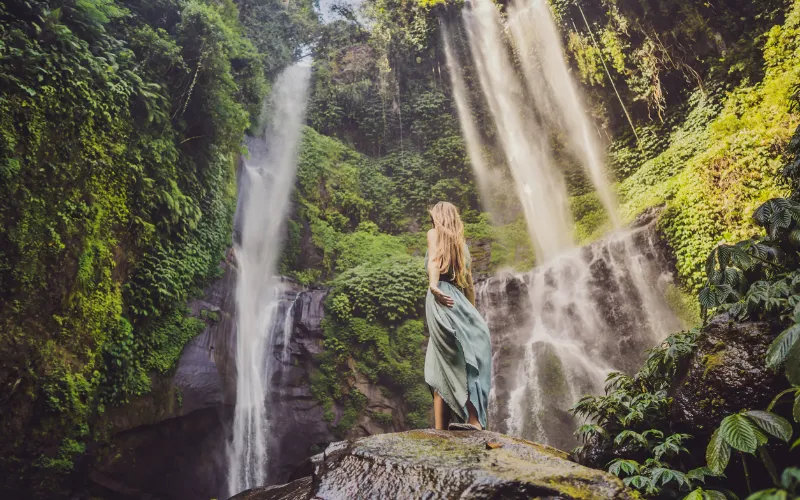
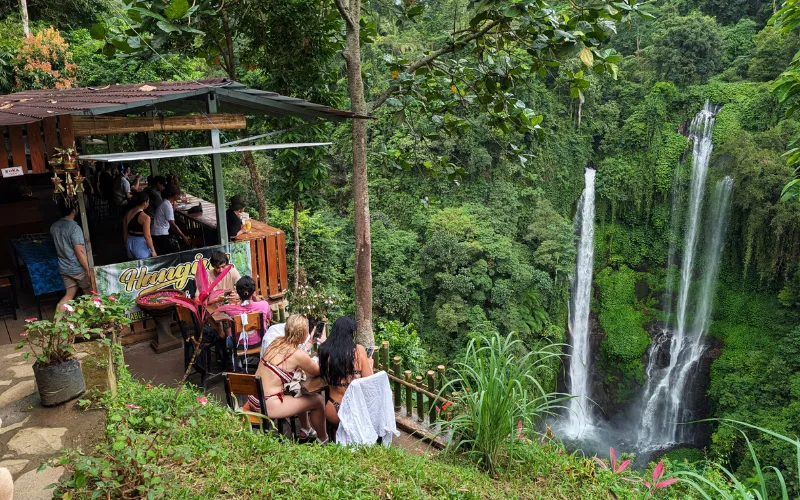
Sekumpul is the one waterfall on this list we’d call unmissable, and also the one that makes you work for it. From the parking area you descend a long stretch of stairs, cross a river, and pass through jungle path before the bale (open-sided gazebo) where the falls finally come into view, several separate streams dropping from cliffs into one shared pool, close enough together that no single photo captures all of them. The newer addition is a hanging restaurant built into the cliffside near the entrance, which has turned a hike that used to end with a sweaty scooter ride home into one that ends with lunch and a view.
| ✓ The Good Stuff | ⚠ Worth Knowing |
|---|---|
| The viewing gazebo is large enough that photos rarely feel crowded, even when the trail itself is busy | Hundreds of steps both ways, the most physically demanding waterfall on this list |
| Restaurant tables fill up fastest on weekends, weekday visits usually mean no wait | Roadside touts sometimes push an inflated “compulsory” guide package, wait until the official ticket booth |
| Best light for photos is the first hour after opening, before the mist burns off | Bring proper shoes, the stairs get slick when the jungle path is wet |
2. Aling Aling, North Bali
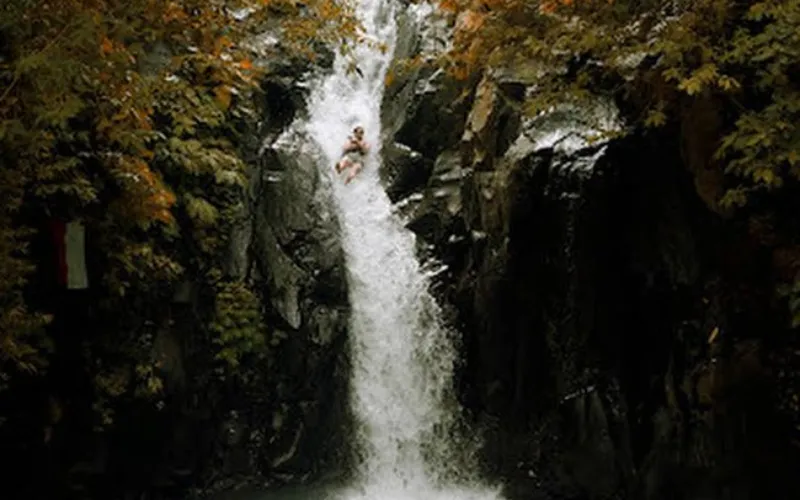
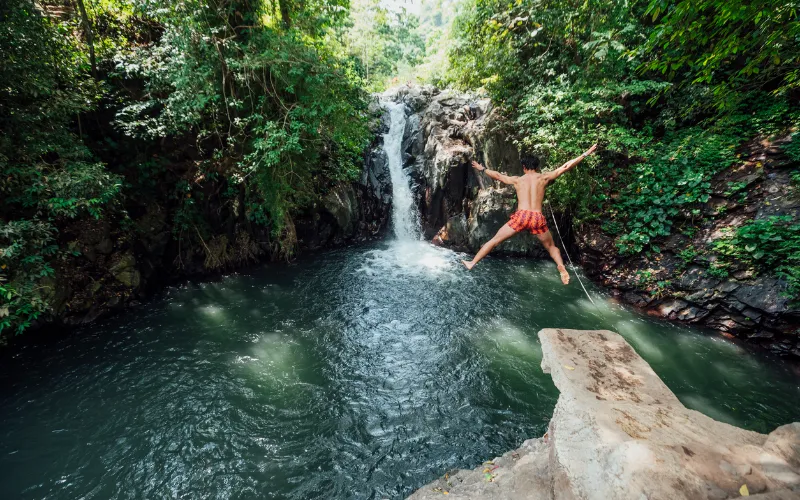
This is one of favorite waterfall at Lovina. If Sekumpul is for people who want to look at a waterfall, Aling Aling is for people who want to jump into one. The main fall itself is sacred and off limits for swimming, but the trail continues to three more waterfalls where a local guide kits you out with a life vest and walks you through cliff jumps at several heights, plus a natural rock slidethat’s more fun than it has any right to be. We sent a couple of our interns out here last year and they came back sunburnt, buzzing, and slightly bruised in the best way.
| ✓ The Good Stuff | ⚠ Worth Knowing |
|---|---|
| A full guided session across all four waterfalls usually takes about two hours | Rocks between the falls get slippery, water shoes work better than flip flops here |
| Easy to pair with Banyumala or Gitgit the same day, they’re all in the same corner of North Bali | School groups and tour buses tend to arrive midday, mornings are noticeably calmer |
| Guides are trained locals, several have been doing this for over a decade | The main sacred fall itself is off limits for swimming, don’t be tempted |
3. Banyumala Twin Waterfalls, North Bali
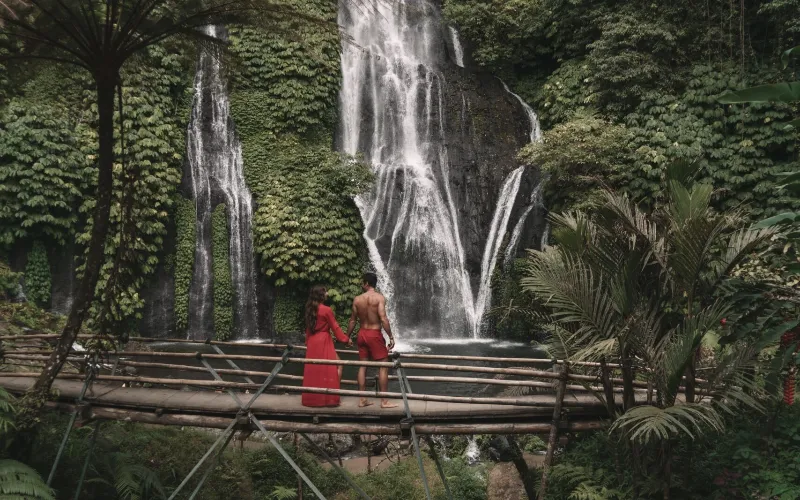
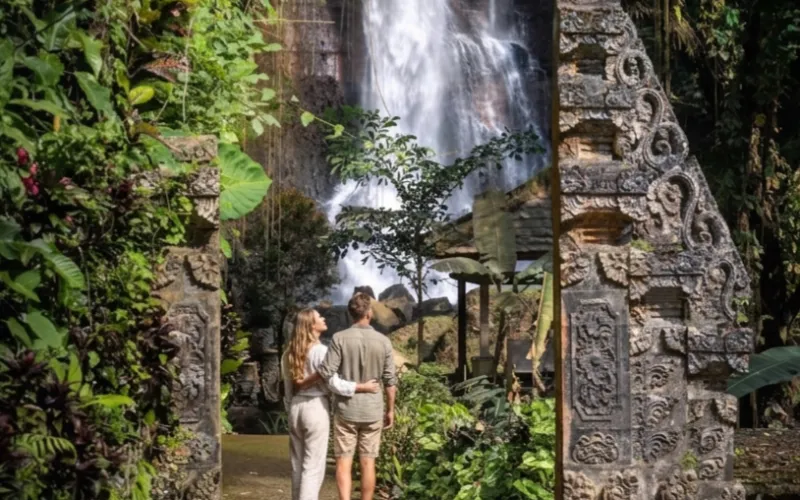
Banyumala splits into two cascades that drop into a shared pool ringed by jungle, and it’s quieter than almost anything else on this list despite being just as photogenic. If you’re in the area, Gitgit Waterfall is a worthwhile fifteen minute add on, taller and more powerful than Banyumala and reached by a short paved path, though it tends to draw more day trippers and roadside vendors angling to sell you a multi waterfall package you don’t need.
| ✓ The Good Stuff | ⚠ Worth Knowing |
|---|---|
| One side of the pool stays cool enough for a proper swim even in the middle of the day | The fifteen minute walk down has stairs that get slippery after rain, decent shoes matter |
| A small warung near the car park sells drinks and snacks if you didn’t pack any | At Gitgit, expect more roadside vendors pushing multi waterfall packages you don’t need |
Central Bali, Waterfalls Near Ubud
The Ubud & Kintamani Backroads
The waterfalls close to Ubud are the ones most honeymooners actually end up visiting, simply because they fit into a half day itinerary alongside rice terraces or a cooking class. The tradeoff is crowds, particularly at the two most Instagrammed spots.
4. Kanto Lampo, Near Ubud
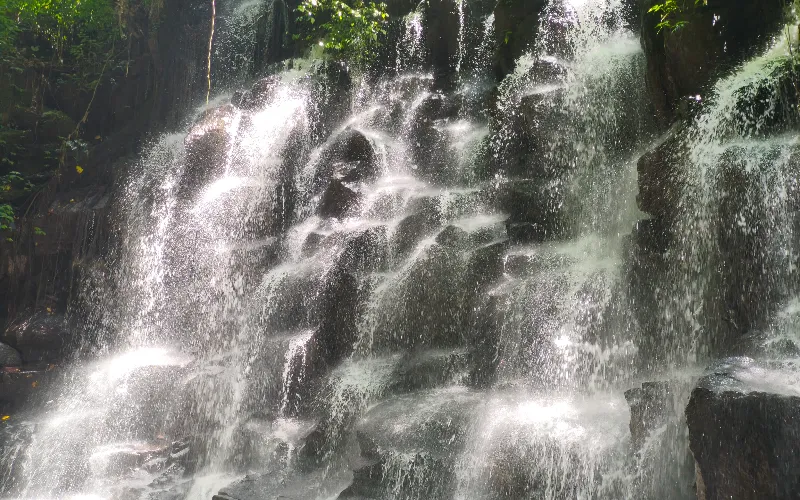
Kanto Lampo is wide, shallow, and cascades over a staircase of boulders that makes for one of the most photogenic waterfall shots in Bali, which is exactly the problem. Arrive after 10am and you’ll be queuing for your turn at the classic photo spot, sometimes for thirty minutes or more.
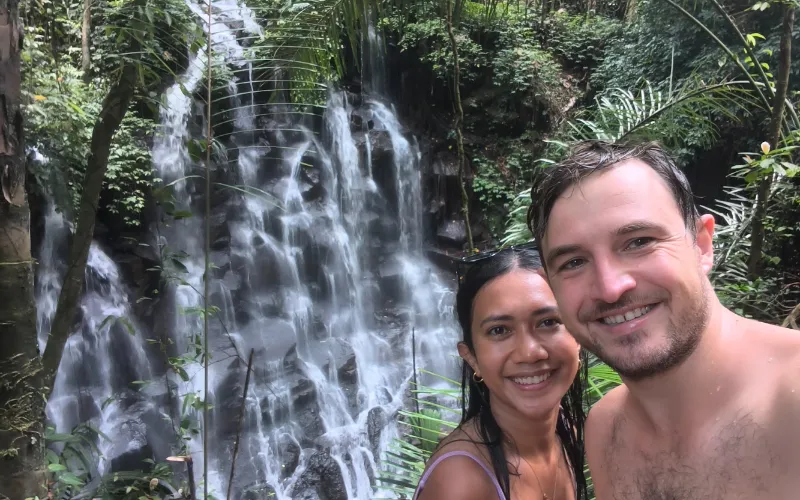
| ✓ The Good Stuff | ⚠ Worth Knowing |
|---|---|
| Easy access from Ubud, fits into a half day itinerary alongside rice terraces | Arrive before 9am if you want the place close to yourself, after 10am expect a real queue (check gmaps busy update) |
| Flat, short walk in compared to most other central Bali waterfalls | Bring water shoes, the rocks are sharp and slick and you’ll get wet regardless |
5. Tukad Cepung, Near Ubud
Tukad Cepung trades a waterfall you can photograph from a distance for one you have to walk into, it sits inside a narrow rock canyon, and on clear mornings, sunlight beams down through the opening above and lights up the spray in a way that photographs like nothing else in Bali.
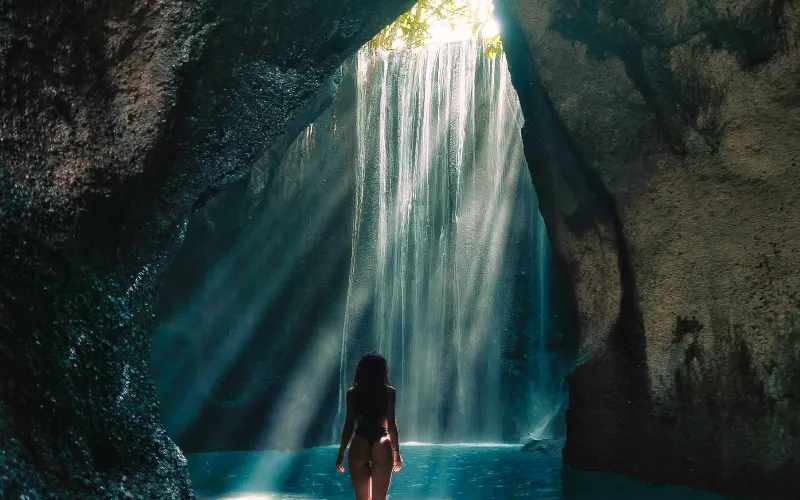
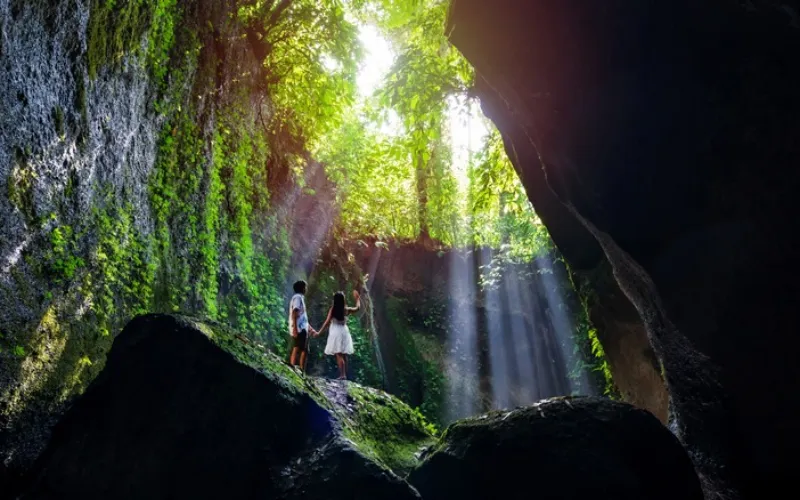
| ✓ The Good Stuff | ⚠ Worth Knowing |
|---|---|
| The canyon walls keep the air noticeably cooler than outside, a nice break from the heat | Draws a crowd nearly as committed as Kanto Lampo’s, go at opening time for the light shaft to yourself |
| Water level is usually low enough for an easy walk to the base without wading | Best on clear mornings specifically, cloud cover means no light beam |
6. Suwat, Near Ubud
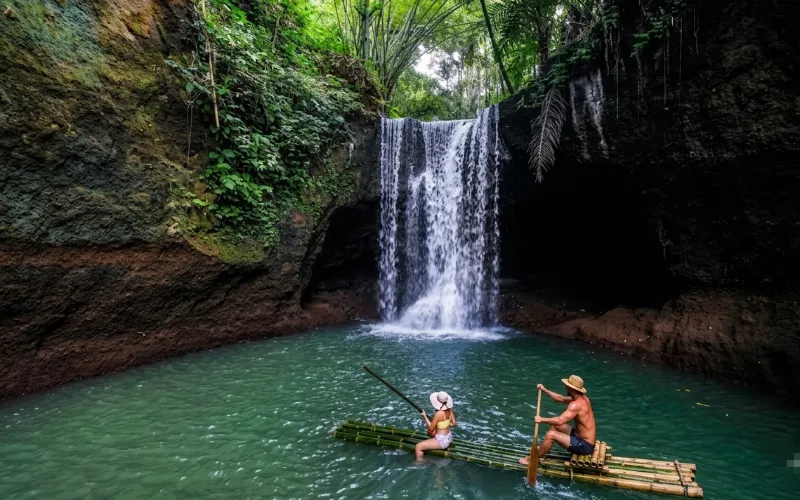
We haven’t made it out to Suwat ourselves yet, but everything visitors describe lines up: a turquoise pool tucked into a cave like rock formation and one thing special about the bamboo raft floating, noticeably calmer than its more famous neighbours, with the option to swim or bamboo rafting photo best thing to do and yea no cliff jump in here.
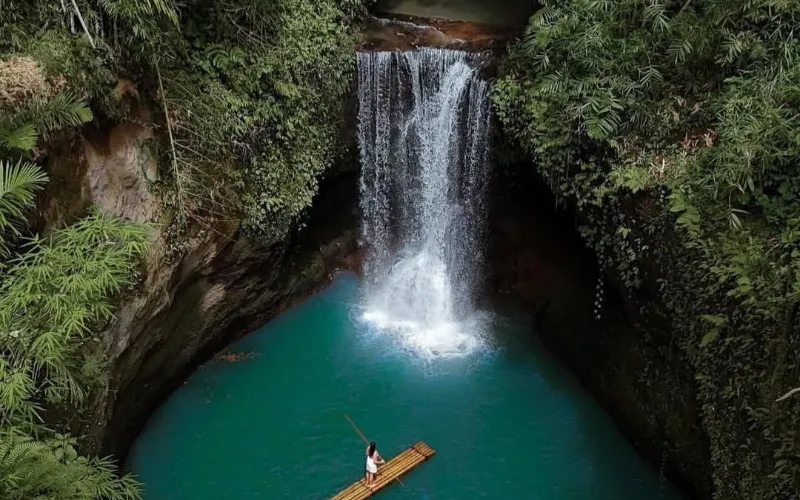
| ✓ The Good Stuff | ⚠ Worth Knowing |
|---|---|
| The rock formation keeps the pool shaded for most of the day | Fewer facilities on site than the more developed stops on this list, bring your own supplies |
| The bamboo raft in the pool makes for a close up falls photo you won’t get elsewhere on this list | Sits close to Tibumana and Goa Gajah, most people fold it into a wider central Bali loop |
7. Tibumana, Near Ubud
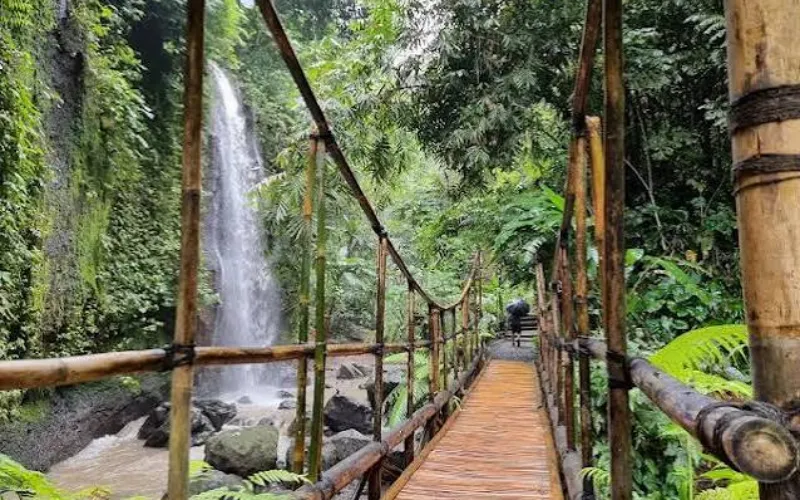
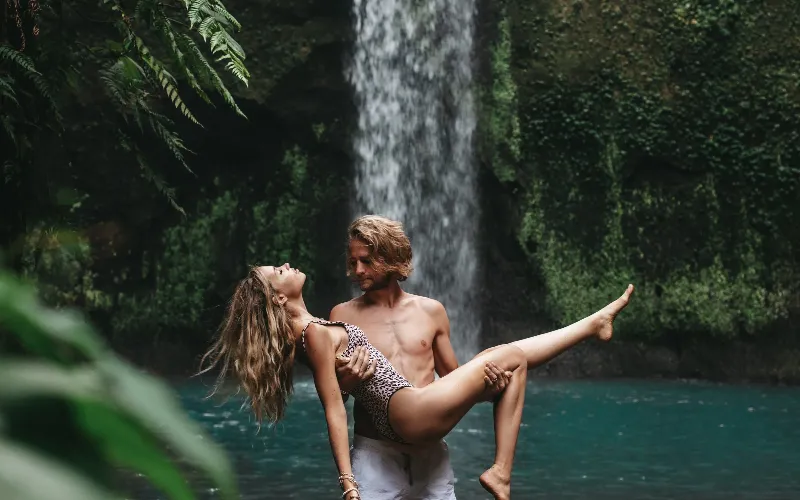
We haven’t stood under Tibumana ourselves either, but the consensus across visitor reviews is consistent: a clean, single drop into a calm pool, reached by an easy walk down well kept stairs through rice fields and bamboo bridges.
| ✓ The Good Stuff | ⚠ Worth Knowing |
|---|---|
| Bamboo bridges along the path make for some of the prettiest walk in shots on this list | Limited parking near the entrance, arrive early on weekends |
| Popular with travellers who want swimming without Kanto Lampo’s crowds or Aling Aling’s adrenaline | Several reviewers mention the water can turn murky after rain, dry season gives you the better odds |
8. Manuaba, Near Ubud
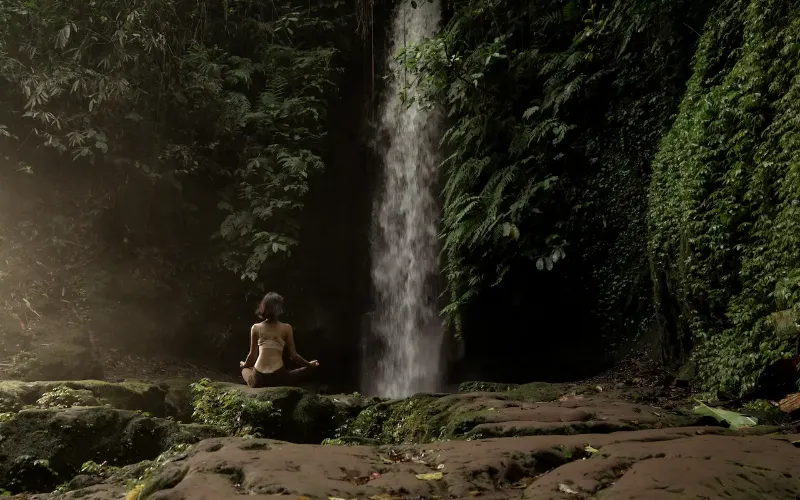
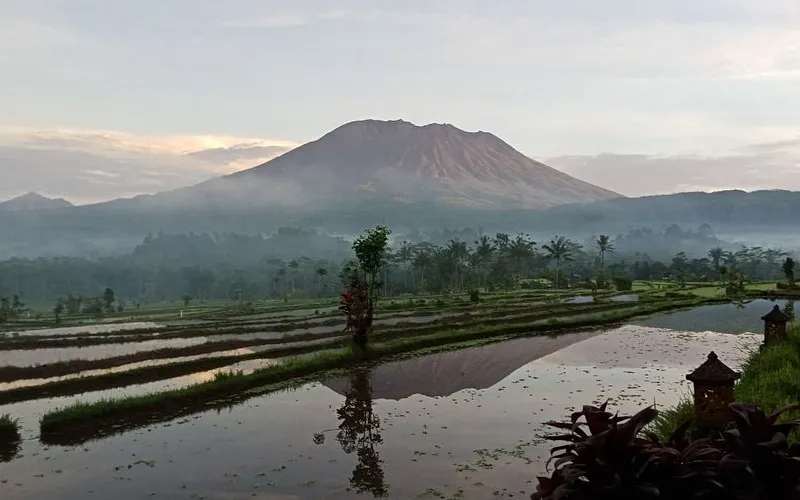
Manuaba is another one we haven’t visited ourselves, but it’s consistently described as a rewarding detour: not one waterfall but two, linked by a short walk through a narrow canyon, with rice fields stretching toward Mount Agung along the way. Locals consider the site sacred, tied to local mythology around the guardian deity of Lake Batur.
| ✓ The Good Stuff | ⚠ Worth Knowing |
|---|---|
| A quieter alternative if Tegenungan or Kanto Lampo’s crowds aren’t your thing | No developed facilities on site, bring water and snacks |
| Both drops are modest in height with shallow pools, easy to wade in safely | Signage is minimal, worth confirming the route with your driver beforehand |
9. Pelisan, Between Ubud and Kintamani
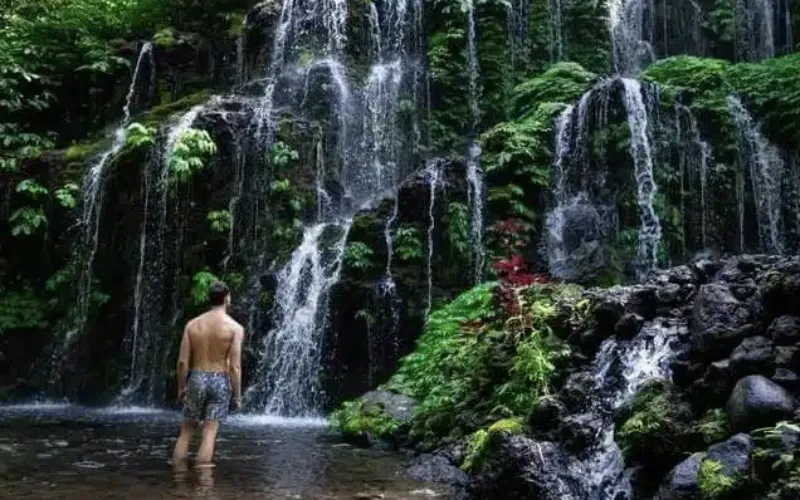
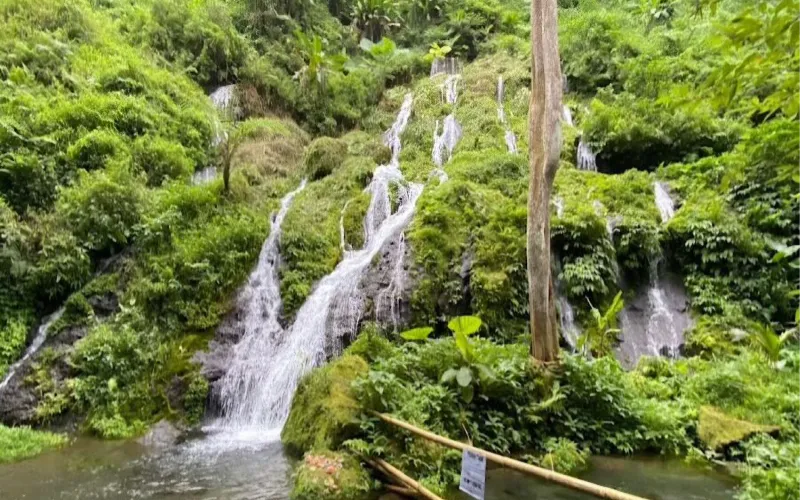
This is our quiet recommendation, and one we don’t see many other guides mention. Pelisan sits along the back road between Ubud and Kintamani, water flowing straight from mountain springs into a shallow pool with almost nobody around to share it with. It won’t win any prizes for height or drama, but if what you actually want is the photo everyone gets at the popular spots, minus the queue and the noise, this delivers it.
| ✓ The Good Stuff | ⚠ Worth Knowing |
|---|---|
| Cool, shallow spring water makes it comfortable for a quick dip even at midday | Minimal signage getting there, worth confirming the route with your driver or GPS beforehand |
| Easy to combine with the Kintamani viewpoint drive since it’s directly on the route | No warungs or facilities nearby, this is a stop, not a destination to linger for hours |
10. A Spiritual Experience, Beji Griya in Bongkasa
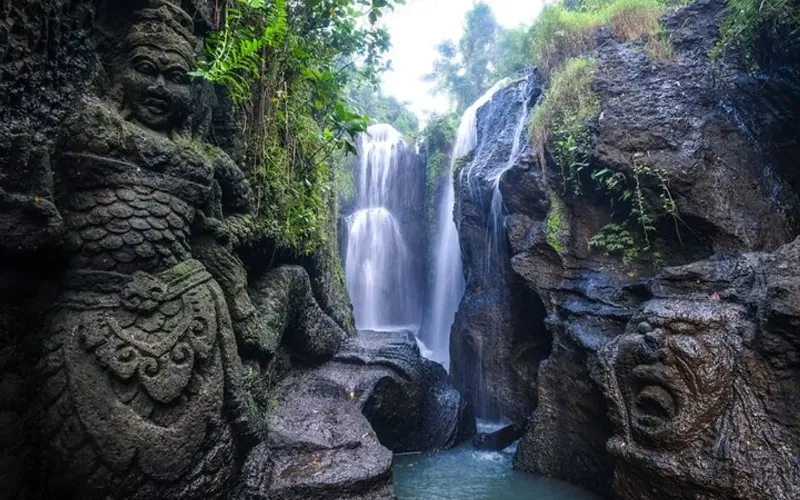
Beji Griya in Bongkasa isn’t really a waterfall stop, it’s a melukat (purification ritual) with a waterfall attached, and it’s worth treating it that way going in. Entry includes a sarong, offerings, a guide, and a priest who walks you through a sequence of prayers and holy water immersions meant to wash away negative energy, ending with a dip beneath the falls themselves. It’s genuinely moving for a lot of visitors, and genuinely touristy in places, with add on experiences like palm readings that feel more like a sales pitch than tradition. If a purification ritual sounds like your kind of morning, our wellness guide covers Bali’s spas and hot springs too. Our advice here: book the basic purification package and skip the upsells. ❤️

| ✓ The Good Stuff | ⚠ Worth Knowing |
|---|---|
| The full ceremony runs about 45–60 minutes, easy to fit into a Ubud morning | Bring a change of clothes, you’ll get properly wet during the final immersion |
| Works well paired with lunch in Ubud afterwards, it’s a short drive from the centre of town | Photography during the ceremony itself is limited out of respect, plan shots for before or after |
11. Sidemen, Gembleng Waterfall’s Terraced Pools
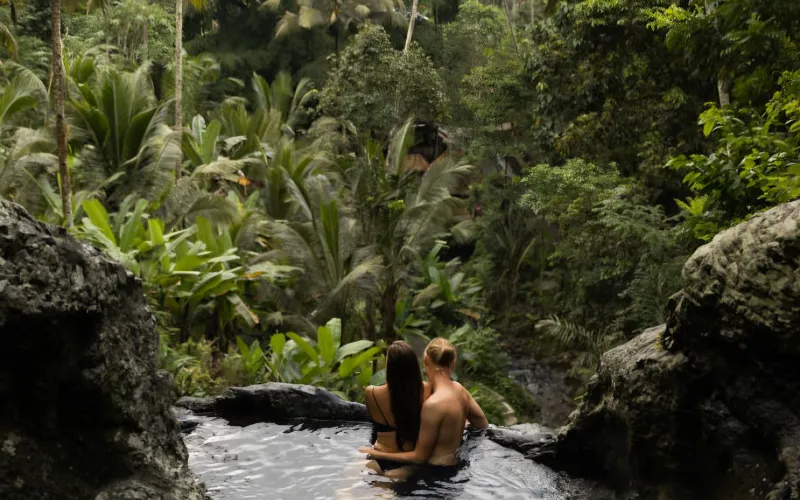
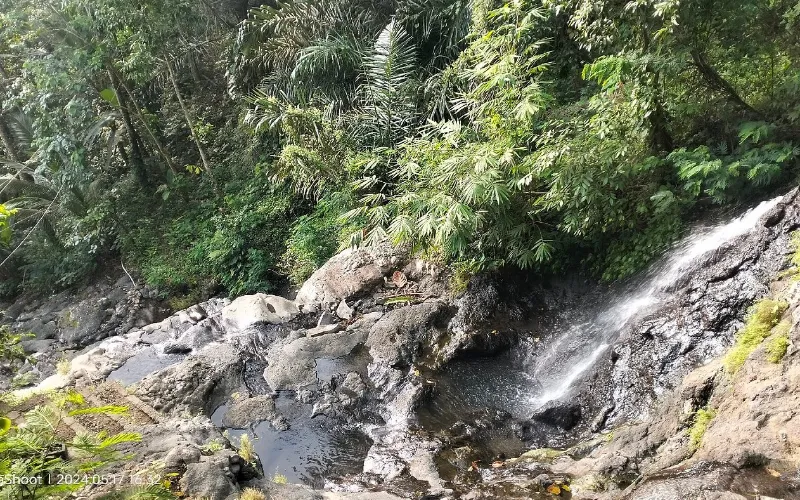
Gembleng, tucked into the Sidemen valley, isn’t one dramatic drop so much as three connected pools stepping down the hillside, each one doubling as a natural infinity pool with views across the rice terraces below. Entry is donation based rather than a fixed ticket, and there’s a small restaurant at the top worth the extra climb for the view alone. The catch is that the top pool, the one with the best photo, has become popular enough that you may wait your turn on a busy afternoon. Go early, or treat the wait as an excuse to linger at the restaurant first.
| ✓ The Good Stuff | ⚠ Worth Knowing |
|---|---|
| The middle pool is usually the quietest of the three if the top one has a line | Steps between pools are uneven in places, didnt use sandals help more |
| Easy to combine with a wider day exploring the Sidemen valley and its rice terrace viewpoints | No changing rooms on site, plan accordingly if you want to swim |
12. South Bali, Tegenungan Waterfall
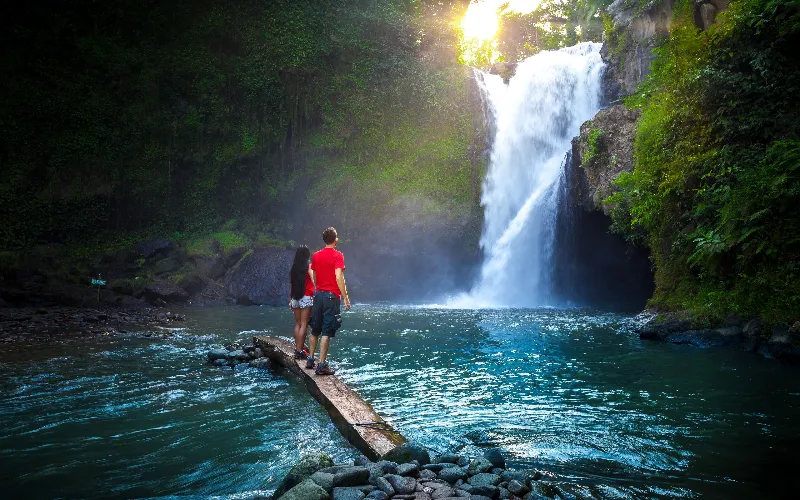
If you’re staying in South Bali and don’t want to drive two hours for a waterfall, Tegenungan is the one to know. It’s the most accessible big waterfall on the island, with a long staircase down to the base pool where swimming is genuinely good in dry season. And to be clear, you don’t need to book anything to see it: a regular entrance ticket at the main gate gets you down to the falls on your own, not for day club required. The honest tradeoff is crowds, this is a bus tour stop, and a glass bridge has recently been added over part of the gorge for anyone who wants that particular thrill with their photo.
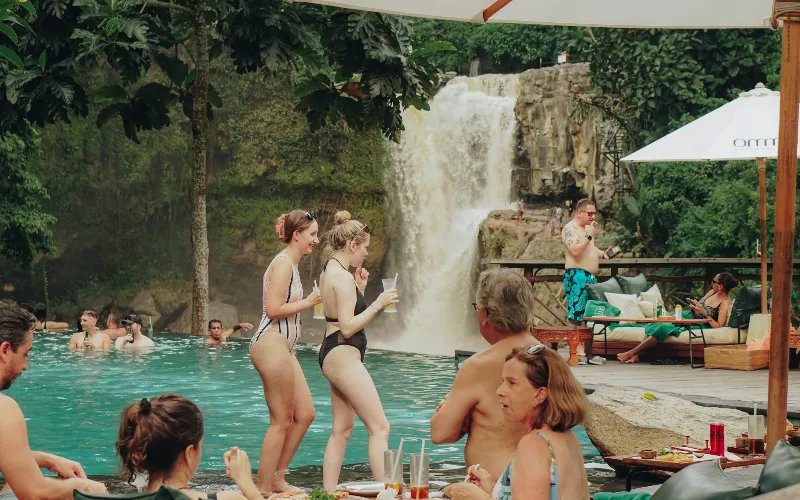
For a more comfortable version of the same view, OMMA Day Club sits right beside the falls with an infinity pool that looks straight out over the cascade, plus an elevator that cuts the climb downto a manageable few steps. A minimum spend gets you access to the pool and lunch, and it’s an easy way to enjoy Tegenungan without the full round trip in the midday heat. Think of OMMA as the upgrade, not the only way in.
| ✓ The Good Stuff | ⚠ Worth Knowing |
|---|---|
| The OMMA elevator means older travellers or anyone with knee issues can still enjoy the view | Glass bridge and Bali swing add-ons are priced separately from waterfall entry |
| Current at the base pool is gentle enough for confident non-swimmers, unlike some central Bali spots | Parking fills up fast on weekends and Indonesian public holidays |
So, Which Waterfall Should You Actually Visit?
If you only have time for one and you’re chasing the single most impressive sight, go to Sekumpul and combine it with lunch at the hanging restaurant.
Want swimming and a genuine adrenaline hit, Aling Aling. After the Instagram shot without the queue, Pelisan is our answer.
Looking for something more reflective than scenic, Beji Griya. And if you’re staying in South Bali and don’t want to give up a whole day to it, Tegenungan with a long lunch at OMMA covers you well.
Whichever you choose, pair it with a night in Munduk or a slower day around Ubud so the drive feels like part of the trip rather than a tax on it. 💜
Frequently Asked Questions ❓️
Do all waterfalls in Bali charge an entrance fee?
Almost all of them, yes. Fees are typically collected by the local village that maintains the site and change often, so we haven't quoted specific amounts here, but expect something modest at every stop on this list.
Which Bali waterfall is best for swimming?
Aling Aling and Suwat both allow proper swimming and cliff jumping. Tibumana and Tegenungan's base pool are also swimmable in dry season, and Banyumala's calmer side works well too.
Which waterfalls near Ubud are least crowded?
Pelisan, Suwat, and Manuaba are your best bets. Kanto Lampo and Tukad Cepung are both worth visiting but are genuinely busy after mid-morning.
Not sure which waterfall fits your itinerary? Our best beaches guide pairs perfectly with this one for the days you’d rather be by the coast. And if you’d rather hand the planning to someone who’s mapped out every waterfall on this list, that’s exactly what our Bali honeymoon planning service is for. 💜✅️

We are Olivia & Dirk
Hi! We have put together this website with a lot of care, based on our own experiences as well as the experiences of our BaliHoneymoon.com team. As a couple, we have lived in Bali for the past 8 years, and we fell in love with the island. We have visited every corner of Bali, especially the romantic places ;-). While our articles do contain affiliate links, you can trust us to recommend only the experiences that we love.
We can help make your honeymoon perfect:
🧡 Check our Bali honeymoon packages for a stress-free romantic honeymoon.
🧡 Let us design a personalized custom honeymoon itinerary based on your interests.
🧡 Book unique romantic experiences with us.
Read more about BaliHoneymoon.com and our local Bali-based team.
 Instagram
 Tiktok
 Pinterest
 LinkedIn